
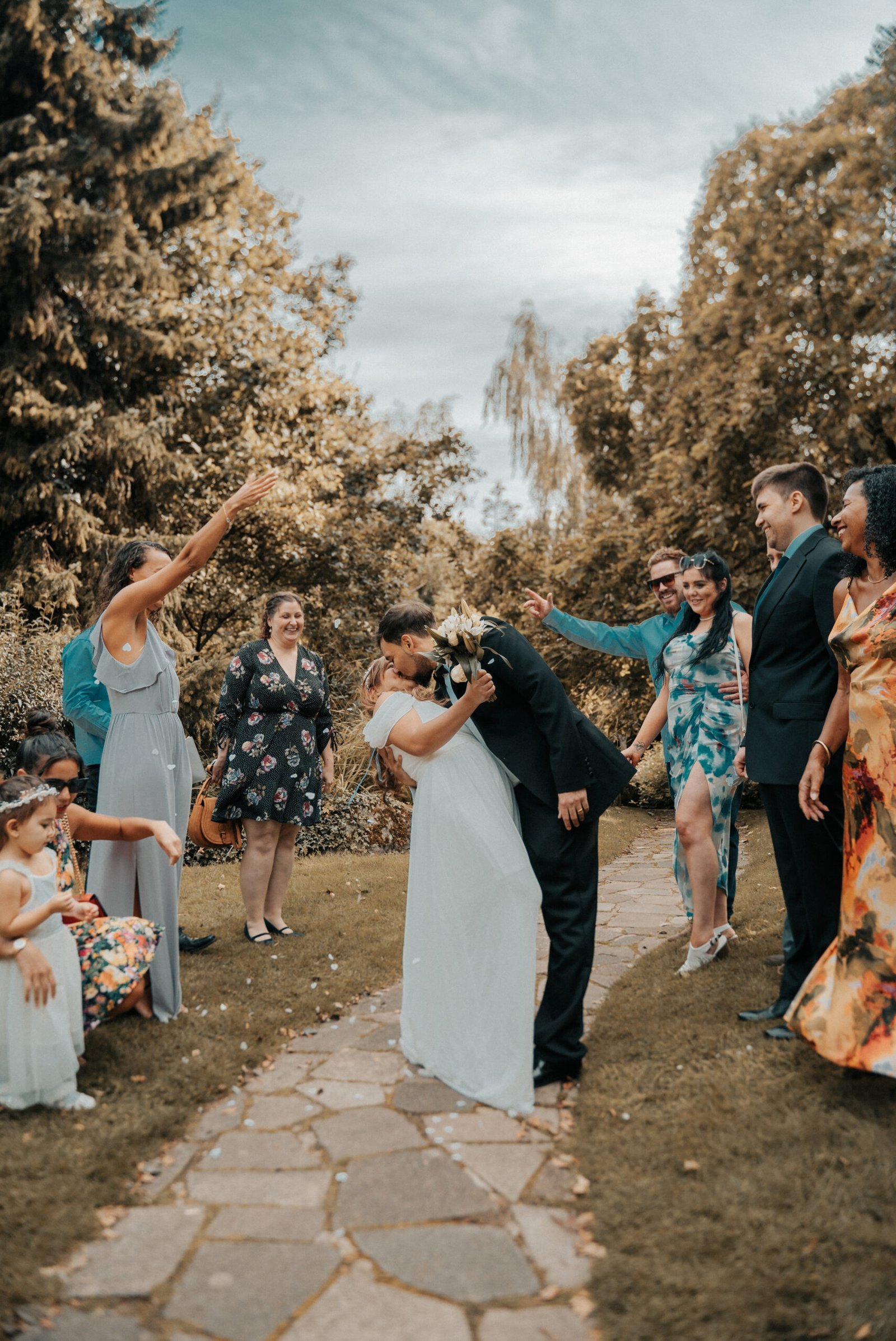
Choose the first and final moments that matter
Start by naming the earliest scene you want in the finished gallery: quiet preparations, final dressing, a first look or simply the arrival at the ceremony. Then choose the final scene—portraits after the ceremony, speeches, first dance or a full dance floor.
Those two decisions create the true coverage window. Add travel, venue restrictions and a small contingency before comparing the result with a package. This is more reliable than beginning with an arbitrary hour count.
When two to four hours can be enough
Short coverage can work beautifully for a civil ceremony, elopement or intimate celebration with one or two nearby locations. It may include arrivals, the ceremony, family groups and a focused couple session, particularly when the guest list and formalities are simple.
The limitation is not image quality; it is narrative range. Preparations, travel delays, a meal, speeches and evening atmosphere will not all fit comfortably. Decide which parts are genuinely outside the story rather than attempting to compress a full wedding into a short booking.
What six to eight hours usually covers
For many London weddings, six to eight hours can cover the final part of preparations, ceremony, drinks reception, family groups, couple portraits and the beginning of dinner or speeches. It gives the gallery a clear beginning, middle and end without automatically extending late into the evening.
Coverage becomes tighter when preparations happen in separate places, the ceremony and reception require travel, or several cultural traditions need protected time. In those cases, a second photographer may solve simultaneous coverage more effectively than adding one hour to a single schedule.
- Final dressing and immediate family moments
- Ceremony arrivals, vows and departure
- Reception atmosphere and candid guests
- A focused family and couple portrait plan
- Dinner entrance, selected speeches or early evening
When ten to twelve hours adds real value
Longer coverage is useful when both partners want preparations photographed, the day moves between venues or the evening celebration is a major part of the experience. It gives important scenes breathing room and allows quieter interactions to sit beside the formal milestones.
More hours should not mean constant posing. The value comes from narrative completeness: the anticipation before the ceremony, transitions between spaces, the changing atmosphere at dinner and the energy once formalities end.
Account for London travel and access
A distance that appears short on a map can take considerably longer with traffic, road restrictions, parking, hotel lifts or venue security. Share exact postcodes, access instructions and the transport plan before the collection is confirmed.
Where possible, keep portrait locations close to the natural route of the day. Beautiful photography rarely benefits from removing the couple from their guests for an unnecessarily long transfer.
Test the proposed coverage against a real timeline
Place every non-negotiable event on one schedule and work backwards from fixed times such as the ceremony, dinner and venue finish. Add realistic buffers, then ask the photographer where coverage would begin and end.
If an important scene sits just outside the collection, adjust deliberately: move a speech, add an hour or remove a lower-priority setup. A good proposal should make those trade-offs visible before the wedding day.
Frequently asked questions
Do we need getting-ready photographs?
Only if that part of the day carries people, details or emotion you want in the finished story. Even 45 to 60 focused minutes can preserve final dressing and close family moments without documenting the entire preparation process.
Can we add an extra hour on the wedding day?
Availability and overtime terms vary, so agree the process and rate in advance. It is safer to build the likely coverage into the plan than to rely on an extension at the last minute.
Does photography and film require more time?
Not automatically. A coordinated photo and film team can share the same timeline, but audio setup, interviews or additional creative sequences may need protected preparation time.