
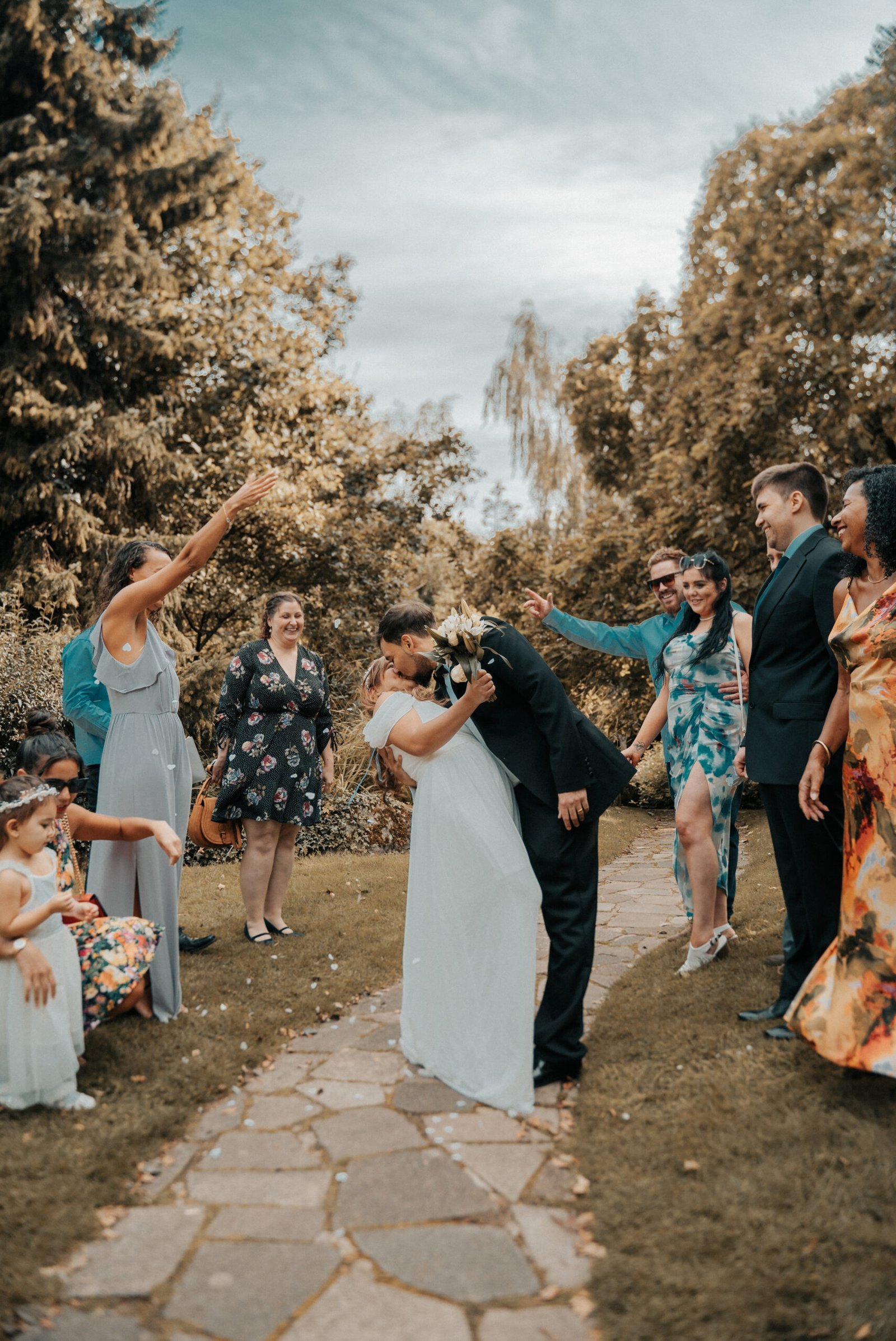
What photography preserves
A photograph gives a moment permanence. It can hold the texture of a dress, a glance during a speech or the arrangement of a room in a form that can be printed, framed and revisited without ceremony. Strong wedding photography balances the significant scenes with details you may not have seen at the time.
Photography also gives you an immediate visual language for albums, thank-you notes and family archives. Because the viewer controls the pace, a still image invites attention to expression and composition in a way that moving footage does not.
What film brings back
Film preserves qualities that cannot exist in a photograph: the rhythm of the entrance, the sound of a parent's voice, the pause before a promise and the energy of a full dance floor. These elements often become more valuable as the years pass.
A well-made wedding film is not simply a chronological recording. It uses sound, movement and editing to return you to the emotional pace of the day. Short highlight films and longer edits serve different purposes, so ask exactly what will be delivered.
How a coordinated team changes the experience
Photographers and filmmakers often need the same position at the same time. When the team plans together, they can share priorities, avoid blocking one another and keep the number of interruptions to a minimum.
Coordination is especially important during ceremonies, couple portraits and speeches. A shared visual approach can also make the final photography and film feel like parts of one story, even though the formats remain distinct.
- One planning conversation for the key timings and people
- A shared understanding of when direction is appropriate
- Cleaner positioning during ceremonies and speeches
- More consistent colour, mood and delivery across formats
Plan coverage around meaning
Start with the moments that matter rather than a fixed number of hours. Preparations may hold important family interactions; evening coverage may matter if the celebration is central to your plans. The right schedule depends on your story.
Build small pockets of breathing room into the timeline. Photography and film become more natural when the day is not moving from one deadline to another. Ten calm minutes can be more productive than a longer portrait session under pressure.
Keep the camera presence proportionate
More equipment does not automatically produce a more luxurious result. The team should use enough coverage to work reliably while remaining sensitive to the room. Ask how microphones, lighting and stabilisation will be used, particularly in intimate venues.
A discreet approach still requires technical preparation. Experienced teams know when they can work with available light and when an unobtrusive light or audio solution is necessary to protect the quality of the final work.
Choose the combination you will actually revisit
Think about how you and your family consume memories. If printed photographs matter, prioritise a strong gallery and album plan. If voices and movement carry emotional weight, film deserves a place in the investment from the beginning.
The most effective collection is not necessarily the largest. It is the one that preserves the parts of the day you cannot recreate, presented in formats you will genuinely return to.
Frequently asked questions
Can one person photograph and film a wedding?
Hybrid coverage can suit very small events, but one person cannot fully capture simultaneous moments in both formats. For comprehensive coverage, dedicated photo and film roles are more reliable.
Will photography and video feel intrusive?
They should not. A coordinated, experienced team plans positions and equipment carefully so the coverage remains calm and proportionate to the celebration.
How long should a wedding film be?
There is no universal ideal. A concise highlight film is easy to revisit, while a longer documentary edit can preserve complete ceremonies and speeches. Many couples value having both.