
Define the client questions first
List the questions clients ask before booking: Who will treat me? What does the clinic look like? What happens during a consultation? How is a treatment approached? These questions reveal the images and sequences that will be most useful.
Separate evergreen needs from campaign needs. Team portraits, consultation scenes and clinic details may work for months. A seasonal treatment or launch will need a more specific message and publishing window.
Build trust through people and place
Begin with the practitioners. Natural, well-directed portraits give a clinic a human centre and can be used across profile pages, booking journeys and introductions. Capture both confident camera-facing portraits and quieter working moments.
Photograph the arrival experience, consultation spaces, treatment rooms and small details that communicate care. Clear surfaces, controlled styling and consistent light matter because the environment becomes part of the promise.
Show the consultation, not only the procedure
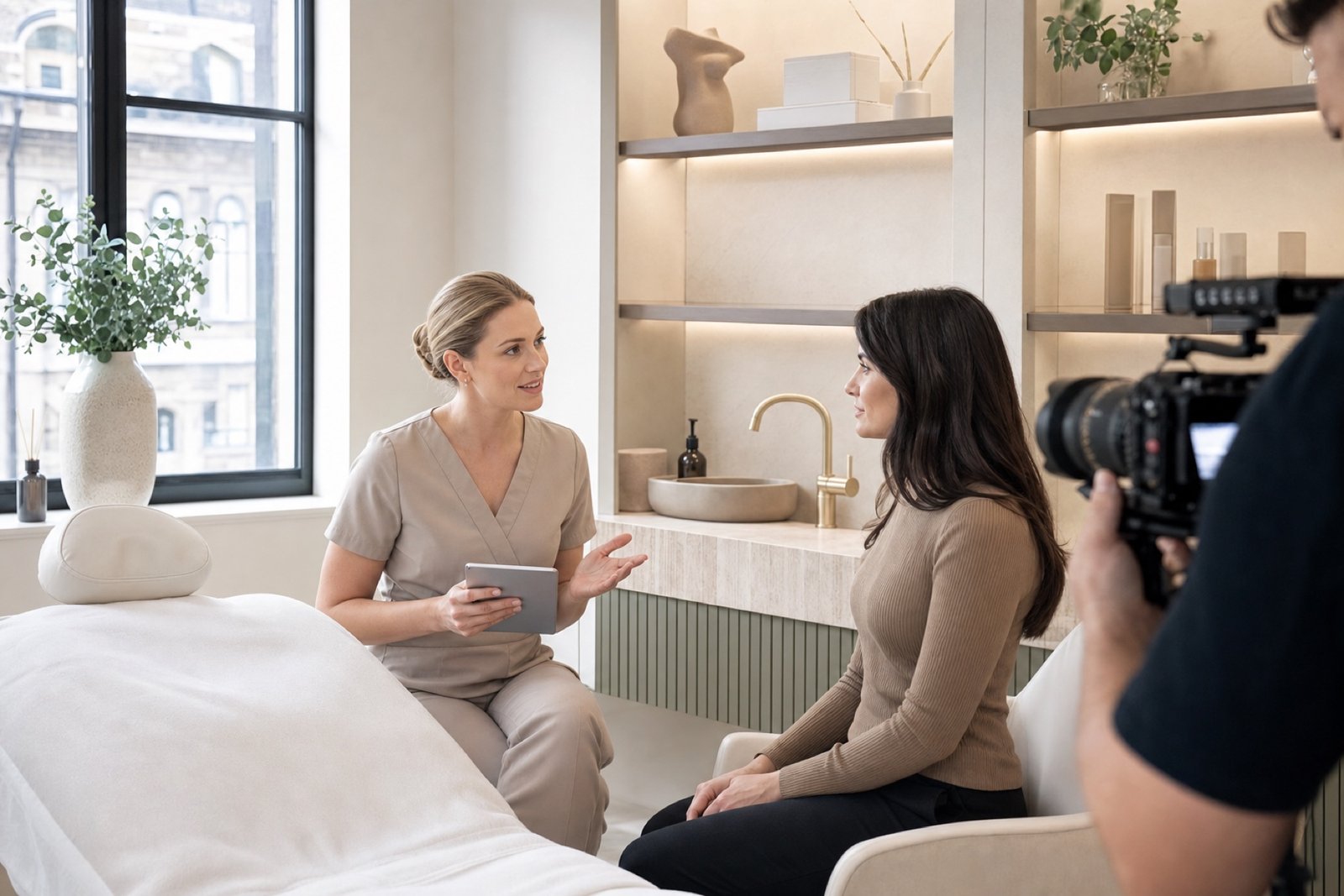
Consultation imagery can communicate listening, assessment and personal attention without making claims. Include eye contact, note-taking, explanation and appropriate close details. These scenes often answer emotional questions more effectively than a device photograph alone.
For treatment footage, plan the exact stages that can be shown comfortably and accurately. Keep practitioner technique authentic; the camera should adapt to the process rather than asking for actions that do not reflect real practice.
Use a layered shot list
Create wide, medium and close variations for each priority scene. Wide images establish the clinic, medium frames show relationships and close details add texture. Film short actions with clear beginnings and endings so editors can create useful sequences.
Leave negative space for website copy and create both horizontal and vertical versions of the most important scenes. This is more efficient than trying to crop one composition into every platform later.
- Founder and practitioner portraits in two orientations
- Arrival, welcome and consultation interactions
- Treatment preparation, technique and aftercare explanation
- Clinic architecture, products, tools and tactile details
- Short vertical films for introductions, FAQs and process
- Clean website banners with room for headings and buttons
Plan consent and accuracy before filming
Use written permission for every identifiable person and be clear about where the content may appear. If a client or model is involved, agree which stages can be photographed and preserve their comfort throughout the session.
Keep clinical and advertising accuracy within the clinic's own approval process. Visual production can support a message, but qualified clinic leadership should review treatment descriptions, claims and before-and-after use before publication.
Turn one production into a useful library
After the shoot, organise assets by practitioner, treatment, environment and format. A clear library allows the team to build coherent pages and posts without repeatedly using the same hero frame.
Plan a publishing rhythm that mixes expertise, people, environment and service information. A premium clinic presence feels confident when it explains enough to build trust and leaves enough visual space to avoid noise.
Frequently asked questions
How often should a skin clinic plan a content day?
A substantial evergreen production can be refreshed seasonally or when the team, space or services change. Smaller focused sessions can support launches between larger productions.
Do we need models for treatment content?
Models can help demonstrate a real client journey, but they are not required for every asset. Practitioner portraits, consultations, environment and detail footage can create a strong library.
Who should approve clinic content?
Assign one brand decision-maker and an appropriately qualified clinic reviewer for treatment accuracy, consent and any claims before publication.