
Define the decision the film should support
Begin with one audience and one point in their decision. A visitor comparing clinics needs different reassurance from a procurement team assessing a professional service. Write the question the viewer should feel able to answer after watching, such as whether the team is trustworthy, the process is manageable or the result is worth the investment.
This focus determines the contributor, interview prompts, proof and edit length. Without it, testimonial films often become pleasant but vague praise. A specific story is more credible and more useful to sales, web and social teams than a collection of general compliments.
Choose the right contributor
The ideal speaker is not necessarily the most senior or enthusiastic customer. Choose someone who experienced the problem your target audience recognises, can describe the decision clearly and is comfortable sharing a genuine outcome. A precise, calm account is usually stronger than exaggerated praise.
Explain where the film will appear, who will see it and how long participation will take. Confirm consent and approval expectations in writing before filming. For clinics or sensitive services, protect privacy and avoid requesting personal information or claims that should not be published.
Use interview prompts, not memorised scripts
Prepare questions that encourage complete answers: what was happening before, what made the person hesitate, why they chose the business, what the experience felt like and what changed afterwards. Ask for examples and moments rather than adjectives. Specific details create trust.
Share themes with the contributor but avoid asking them to memorise final wording. On camera, remembered scripts can sound tense and impersonal. A good interviewer listens, follows useful detail and asks the speaker to restate an answer naturally when context is missing.
- What problem or need brought you here?
- What mattered when you were choosing?
- What was the experience actually like?
- What changed or became easier afterwards?
- What would you tell someone making the same decision?
Make the filming environment feel easy
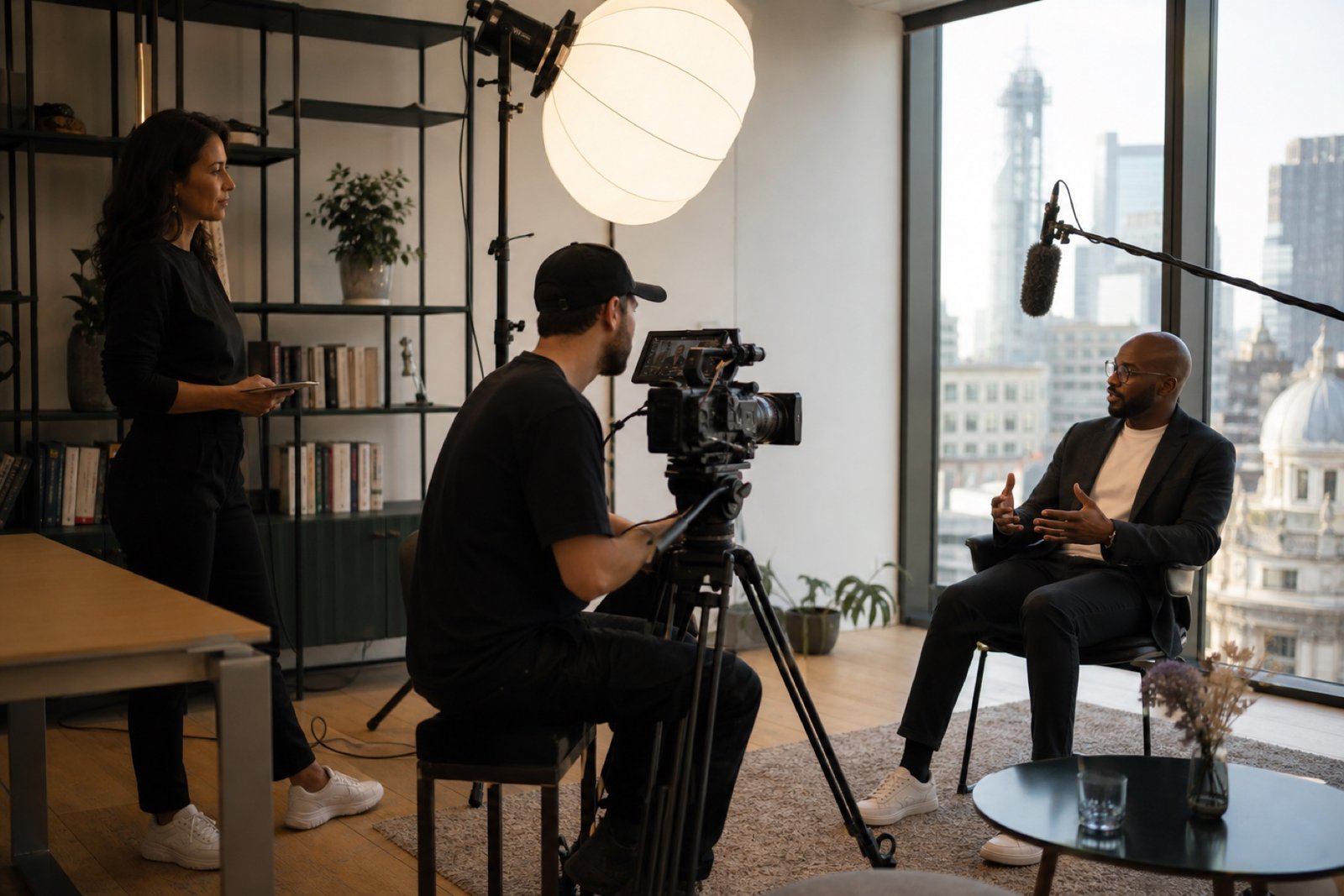
Choose a quiet location with visual relevance, enough depth for the background and control over interruptions. The production should allow time for lighting, sound and a relaxed conversation. Clean audio matters as much as the image; viewers will forgive a simple frame more readily than distracting noise.
Give practical wardrobe guidance based on the background and brand palette. Avoid tiny patterns, noisy jewellery and prominent third-party logos. Keep the set small, introduce each crew member and let the contributor settle before expecting the most personal answer.
Film B-roll that proves the story
B-roll should show the environment, process, product and people described in the interview. A clinic story might include arrival, consultation spaces and team interaction; a business service might show collaboration, tools, delivery or the customer's working context. The images make abstract claims tangible.
Build the B-roll list from the planned edit rather than collecting unrelated office footage. Capture wide context, medium action and useful details. When privacy or operational access limits what can be shown, plan alternatives such as hands, spaces, products, screens or staff demonstrations.
Plan versions, captions and approval before filming
A master case-study film may sit on a website, but the same interview can support shorter sales clips, vertical social edits and quote-led cut-downs. Decide the aspect ratios, approximate durations, caption style and calls to action before the shoot so framing and answers work across every version.
Use an approval process that checks names, roles, claims and sensitive information without rewriting the speaker's personality. Agree who signs off and how many revision rounds are included. The final film should feel polished, but the person's own voice must remain recognisable.
Frequently asked questions
How long should a testimonial video be?
A focused website case study is often one to three minutes, while social cut-downs may be fifteen to sixty seconds. The story should determine the length rather than an arbitrary target.
Should customers receive the interview questions in advance?
Share the themes and practical expectations, but avoid asking them to memorise answers. Prompts and a conversational interview normally sound more credible.
Can one shoot create several testimonial videos?
Yes. Multiple contributors or a well-planned interview can produce a master film, individual stories, vertical clips and quote-led edits, provided deliverables are planned before filming.
Do testimonial videos need captions?
Yes for accessibility and silent viewing. Captions should be accurate, readable and prepared for each aspect ratio rather than placed where platform controls may cover them.