
List every channel before choosing dishes
Start with where the photographs will appear: website headers, menu pages, booking platforms, Google Business Profile, press releases, delivery apps, email campaigns and social media. Record the required crops, file dimensions and any areas where text or a booking button will sit.
This prevents a common mismatch in which beautifully framed editorial photographs cannot fit a delivery tile or mobile website banner. Give high-value placements priority, then build supporting content around them. A single planned setup can often produce a clean menu view, an atmospheric hero image and several vertical details.
Select dishes for range, value and durability
Choose the items customers need to recognise and the dishes that best express the restaurant. Include signatures, commercially important plates, one or two accessible favourites, seasonal additions and enough variety in colour, height and texture to avoid a repetitive gallery.
Ask the chef how each dish changes after leaving the pass. Ice cream, foam, herbs, fried coatings and sauces may need to be photographed immediately, while breads, packaged products and some cold dishes can wait. Set the shooting order around food quality rather than menu sequence.
Build a complete food and drink shot list
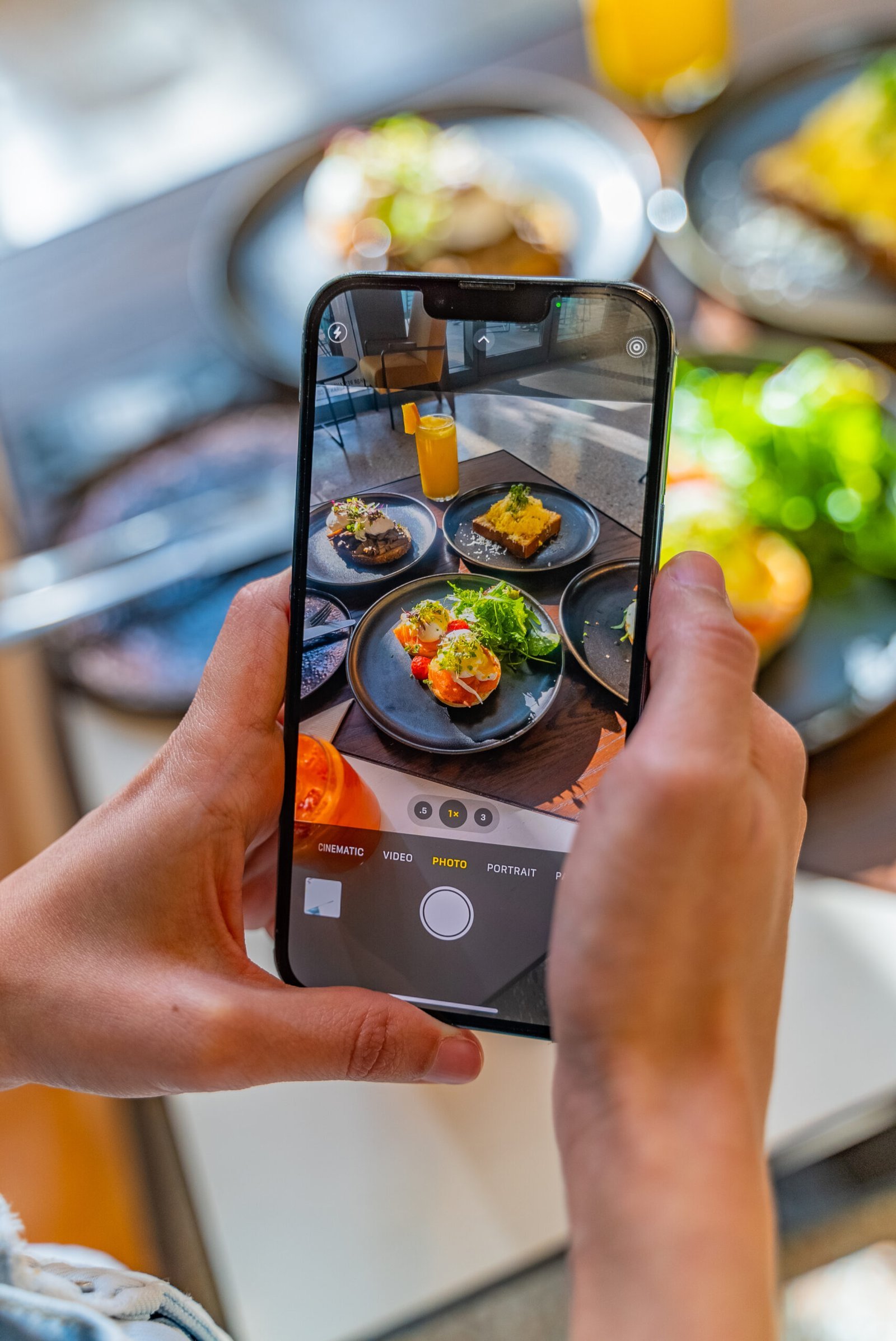
For each hero dish, capture a clear three-quarter or overhead view, an important detail and a contextual frame where appropriate. Add groups that show how guests order together, but keep combinations believable. Include hands only when they help demonstrate serving, scale or the dining experience.
Drinks deserve their own plan for glassware, condensation, garnishes and reflections. Photograph signature cocktails, wine service, coffee or non-alcoholic options that contribute to the spend and identity. Prepare duplicates of fragile garnishes and ensure labels face correctly before the lighting is finalised.
- Signature dishes and priority menu categories
- Ingredients, texture and close preparation details
- Cocktails, wine, coffee and premium soft drinks
- Sharing tables and realistic food combinations
- Packaging and delivery-friendly menu images
- Horizontal, square and vertical crops for each key item
Show the room at its most inviting
Schedule interiors when the room is dressed, clean and naturally quiet. Capture a wide establishing view, key seating areas, the bar, private dining spaces, distinctive materials and details that communicate atmosphere. Exterior and entrance photographs also help customers recognise the venue and understand arrival.
A completely empty room can feel architectural rather than hospitable, so plan a second set with a controlled number of guests or staff. Movement, conversation and service add life without hiding the design. Check bulbs, table alignment, reflections and visible signage before photographing each angle.
Run the shoot around kitchen capacity and delivery
Build the schedule with the chef, manager and photographer together. Group shots by lighting and surface, identify who approves presentation and keep one person responsible for marking completed dishes. Avoid a full public service unless documentary atmosphere is the main goal; the kitchen needs enough capacity to produce camera-ready food consistently.
After delivery, organise files by food, drink, people, space and format. Keep high-resolution masters separate from web and delivery exports, and record which menu version was photographed. Plan smaller seasonal updates before the imagery becomes inaccurate rather than repeating the entire production every time one dish changes.
Frequently asked questions
How many dishes should a restaurant photograph in one day?
The number depends on styling complexity, kitchen capacity and required variations. Prioritise signature and commercially important dishes, then estimate the schedule with the chef and photographer rather than forcing the full menu into an unrealistic day.
Do we need a professional food stylist?
A stylist is valuable for advertising, packaging and complex campaigns. For restaurant menus, the chef may lead presentation while the photographer refines camera-facing details, provided responsibilities and approval are agreed.
Can restaurant photography happen during normal service?
Some atmosphere and service photographs benefit from a controlled live period, but hero food and interiors are usually more consistent when the kitchen and room have dedicated production time.
How often should restaurant photographs be updated?
Update when the menu, chef, interiors, packaging or brand direction changes. Seasonal restaurants may schedule smaller quarterly captures while retaining a larger evergreen library for the website and press.