
Separate preparations are the clearest reason
When both partners prepare in different places, a second photographer can cover each story without forcing one schedule to begin unusually early. Both sets of family, friends and details receive attention before the ceremony.
If preparations happen in the same hotel or close rooms, one photographer may move between them effectively. Share addresses, travel time and readiness schedules before deciding.
Ceremonies contain simultaneous reactions
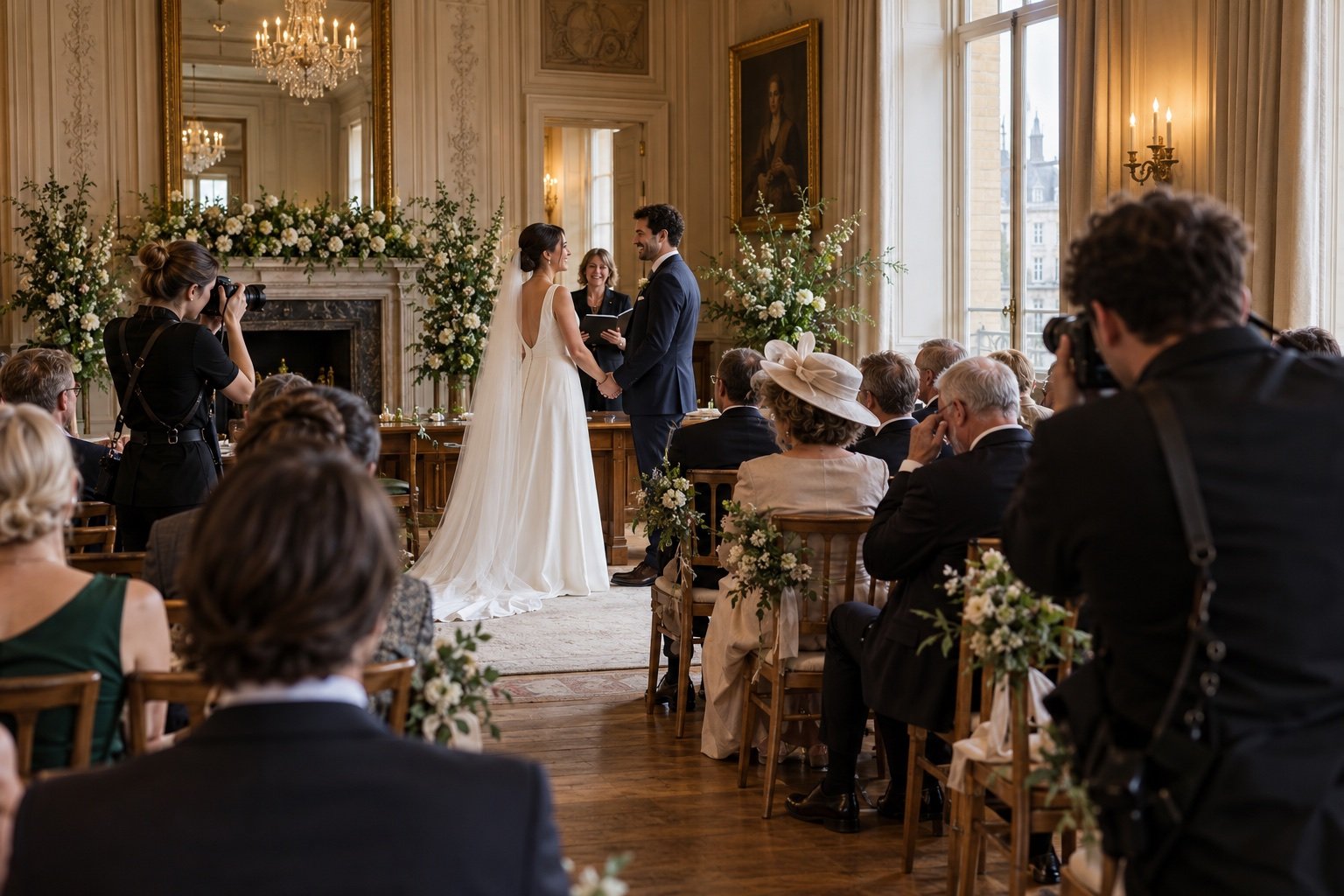
During an entrance, vows or first kiss, one photographer may concentrate on the couple while the second records parents, wedding party and guests. Complementary positions also provide visual variety without one person moving through the ceremony.
Venue rules still apply. Two photographers are only beneficial when they can work discreetly and have agreed positions that do not distract guests or appear in every angle.
Guest count matters less than complexity
A large guest list creates more interactions, but layout is equally important. Multiple floors, several reception rooms, a large garden or overlapping entertainment can make simultaneous coverage valuable even at a moderately sized wedding.
A focused single-venue celebration with a clear timeline may be covered well by one photographer despite many guests. Ask what cannot be observed from one position rather than using a fixed number as the rule.
- Preparations in separate locations
- Several rooms or simultaneous activities
- A large ceremony with restricted movement
- Extensive guest and reception coverage
- A compressed timeline with little travel margin
A second photographer changes the gallery
The result should be more perspective, not just more files. One photographer may follow the central action while the other builds context: room views, guest reactions, details, arrivals and interactions outside the couple's immediate line of sight.
Ask to see weddings photographed by a team. Look for complementary storytelling rather than duplicated frames made from nearly the same angle.
When one photographer is enough
Registry weddings, elopements, compact guest lists and single-location days often suit one experienced photographer. A smaller presence can feel more intimate and allows the photographer to build close awareness of the people involved.
One photographer also works when priorities are clear and the schedule does not require two places at once. Good timeline planning may solve the problem more effectively than adding another person.
Check who the second photographer will be
Ask whether the second is a regular collaborator, how their work is briefed and who selects and edits the final photographs. Consistent colour and storytelling should remain the responsibility of the lead studio.
Confirm hours as well. The second photographer may be most valuable for preparations through the drinks reception rather than the entire evening, depending on the wedding structure.
How Miles Studios London can help
Miles Studios London recommends team size from the real structure of the wedding: preparation addresses, ceremony restrictions, venue layout, guest experience and overlapping moments. We will explain where a second photographer adds meaningful perspective and where one experienced photographer is sufficient.
When two photographers are appropriate, the team works to one brief and Miles Studios London selects and edits the complete gallery for a consistent final story.
Frequently asked questions
How many guests require a second photographer?
There is no universal number. Venue layout, separate preparations, overlapping events and your coverage priorities matter as much as guest count.
Will two photographers be distracting?
A coordinated team should be discreet. They should agree positions and movement, particularly during ceremonies and speeches.
Does a second photographer deliver twice as many photos?
Not necessarily. The benefit is complementary angles, reactions and simultaneous coverage; the final gallery should still be carefully selected.
Can we book a second photographer for part of the day?
Often yes. Preparations, the ceremony and drinks reception may be the periods where a second perspective adds the most value.