
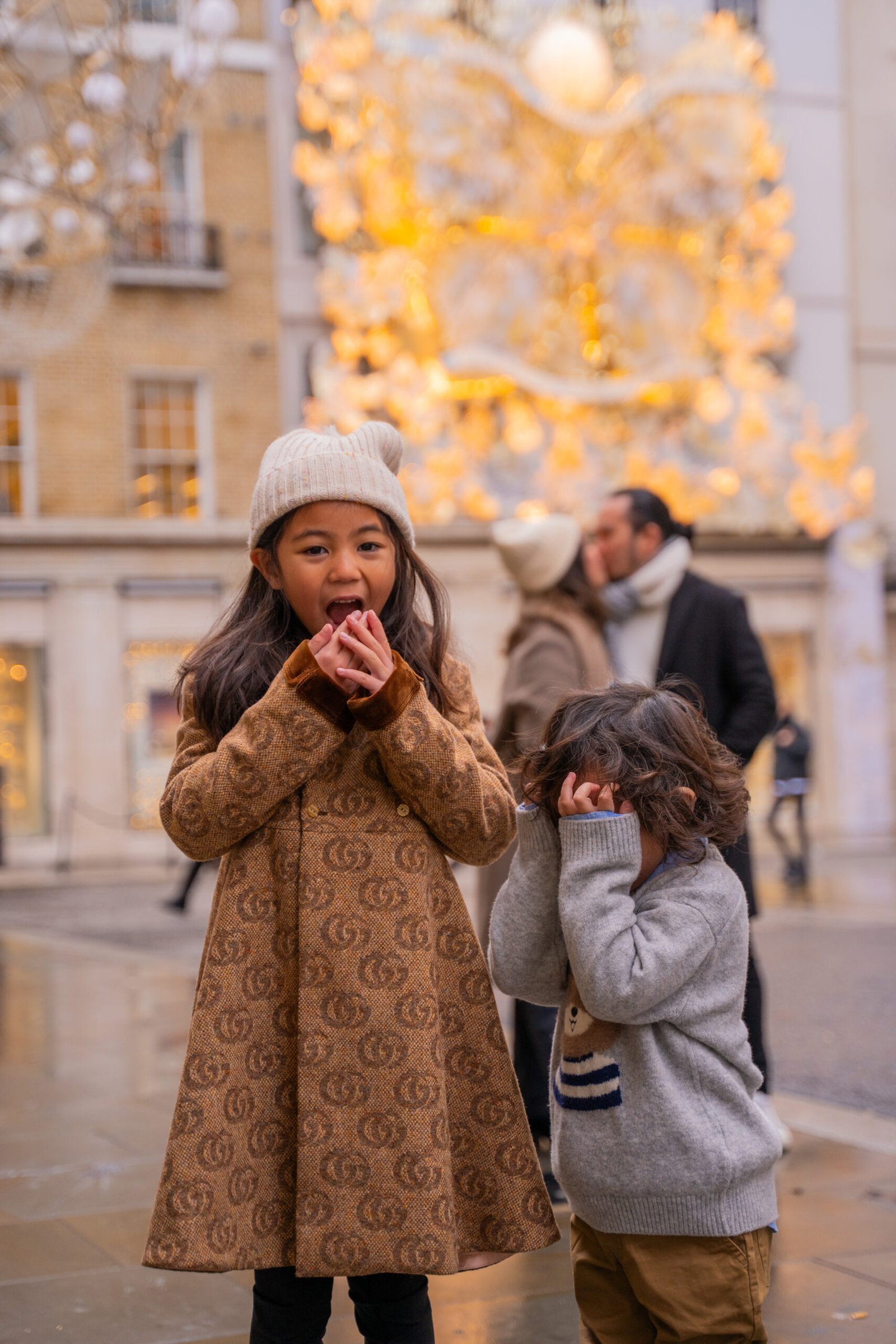
Choose the feeling before the location
Decide whether you want the session to feel intimate, polished, playful or connected to London. Home sessions preserve daily context; parks create room for movement; elegant streets and interiors can support a more formal portrait story.
One location is usually enough. Children settle more easily when the session is not interrupted by repeated journeys and adults can remain present rather than managing logistics.
Plan around energy and light
Young children are often at their best after rest and food. Choose that window first, then ask the photographer how to use the available light. A cheerful child in softer midday shade is more valuable than perfect evening light at bedtime.
Allow a little margin before and after the session. Rushing into the first photograph can make the experience feel like another appointment rather than time together.
Coordinate clothing without making a uniform
Choose a small palette and vary tone, texture and silhouette across the family. Neutrals, softened colour and simple patterns are easy to combine, but the best choices still feel recognisable to the people wearing them.
Lay every outfit together before the day and remove anything that dominates unexpectedly. Comfort matters, especially for children who will sit, walk and play.
Let children participate rather than perform
Avoid asking a child to smile repeatedly. Movement, a familiar game, a walk or a simple task gives them something real to respond to and creates more varied expressions.
Bring only one or two meaningful objects if they help a young child settle. The photographer should work patiently and change pace before frustration becomes the story of the session.
Include grandparents with intention
Multi-generational photographs gain significance over time. Plan the easiest access, provide somewhere to sit and make these combinations early while everyone has energy.
Capture the whole family, each household and smaller relationships such as grandparents with grandchildren. A concise list protects those priorities without making the session formal from beginning to end.
- The full family together
- Grandparents with all grandchildren
- Each household or sibling group
- Individual portraits and natural interactions
Choose a photographer for both manner and style
Review complete family galleries, not only isolated portraits. Look for consistent skin tones, confident group composition and an ability to photograph both quiet and energetic moments.
Ask how the photographer directs adults, responds when children need a break and helps you choose final prints. The experience should feel calm enough that the photographs are associated with a good family memory.
Frequently asked questions
What is the best age for family photographs?
There is no single best age. Photograph the season you want to remember; the approach can be adapted for newborns, active young children, teenagers and multi-generational families.
How long should a family session last?
Around 60 to 90 minutes works well for many families. Newborn sessions or larger multi-generational groups may need longer, while a focused update can be shorter.
What happens if it rains during an outdoor London session?
A good plan includes a sheltered route, an indoor alternative or a clear rescheduling policy. Light rain can also create beautiful atmosphere when everyone is comfortable.